


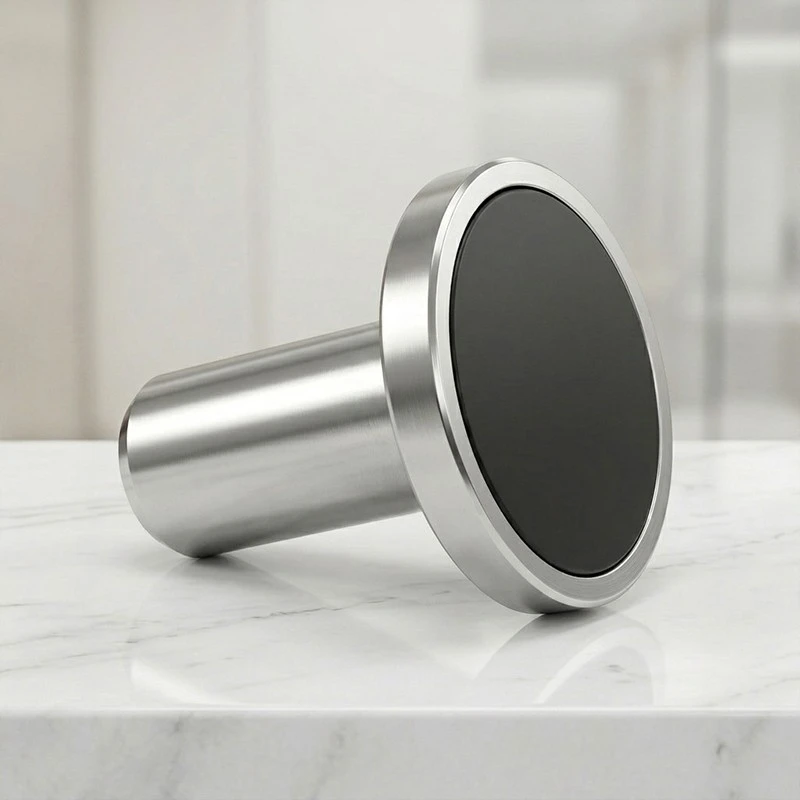


Fluorosilicone Valve Core
Tianjin TGE BIAM Graphene Technology Co., Ltd. is one of the most reliable manufacturers and suppliers of fluorosilicone valve core in China. Welcome to buy bulk durable fluorosilicone valve core in stock here from our factory. If you have any enquiry about customized service and quotation, please feel free to email us.
Product Introduction
Fluorosilicone (FVMQ) valve cores address a specific and demanding intersection of requirements: the low-temperature flexibility of silicone combined with resistance to fuels, oils, and solvents that standard silicone cannot tolerate. The fluoroalkyl side groups on the silicone polymer chain provide this dual capability, making FVMQ the correct material where operating temperatures span from deep sub-zero to elevated ranges and where the medium is a petroleum-based fluid or aromatic fuel.
Operating temperature range is −50°C to +200°C - the widest thermal window in the standard elastomer range. This breadth is the defining characteristic of FVMQ valve cores and the reason they are specified in aerospace, cryogenic-adjacent, and arctic-service applications.

Introduction to Performance
|
Operating Temperature |
−50°C to +200°C (widest thermal range of standard elastomers) |
|
Low-Temperature Flexibility |
Retains elasticity to −50°C; suited to arctic and aviation environments |
|
Fuel / Oil Resistance |
Good resistance to aviation fuels, petroleum oils, and aromatic hydrocarbons |
|
Mechanical Strength |
Moderate - lower tensile and tear strength than NBR or FKM; design accordingly |
|
Compression Set |
Excellent at both high and low temperature extremes |
|
Chemical Resistance |
Resistant to dilute acids and alkalis; not suited to concentrated solvents or steam |
Introduction to Processing Techniques and Materials
FVMQ compounds require careful formulation control. Well selected cure systems are standard for FVMQ, providing better compression set and thermal stability in valve core applications.
Metal-to-FVMQ bonding requires surface preparation and primer selection, Molding temperature is a critical variable and post-cure is required. The lower mechanical strength of FVMQ relative to FKM means metal substrate geometry and rubber layer thickness must be designed to avoid stress concentrations that would not be limiting in harder compound formulations.
Typical Applications
Typical Applications for Fluorosilicone Valve Core include:
Automotive fuel injection system components requiring wide thermal range
Ground support equipment operating in arctic environments
Instrument and control valves in offshore polar installations
Advantages
FVMQ is a speciality compound. It is specified when the combination of temperature range and fuel resistance is required simultaneously - a condition that neither FKM nor NBR alone can satisfy at the low-temperature end. Substituting a lower-cost compound in FVMQ service environments typically produces low-temperature seal hardening, increased leakage, and shortened service intervals.
At TGE, our fluorosilicone valve cores are manufactured with compound selected for the specific thermal and chemical requirements of the application. We provide compound selection and cold-soak flexibility testing data to support qualification at operating temperature extremes.
FAQ
Q: Are you a manufacturer or trade company? Where are you?
A: We are manufacturer and our factory is located in Tianjin, China. We can design the rubber formulation, we can design the product structure, we have all the manufacturing and testing equipment in our factory (such as mixer, sand blasting, vulcanizing, rheometer, Mooney test machine, tensile test machine, low-temperature brittleness test machine, stiffness test machine, etc.).
Hot Tags: fluorosilicone valve core, China fluorosilicone valve core manufacturers, suppliers, factory, compression molded rubber metal insert, hydraulic rubber metal valve core, industrial sealing insert, pneumatic rubber metal valve core, rubber covered valve core, rubber metal valve component
You Might Also Like


Send Inquiry